FLIGHT REVIEW
Review with purpose
Revisit operating knowledge and flying skills with an instructor. Discuss your logbook, current flying, and the scope of your review.
Discuss a flight review SKYTREKAVIATION
Every pilot starts with a possibility. Turn yours into a flight path with personalized Part 61 training, a safety-first mindset, and a team that makes you feel at home.

First takeoff or next rating, see what comes next.
| Pathway | Starting point | Key experience | Testing |
|---|---|---|---|
| Private Pilot | No flight experience needed; 17+ for certificate | 40 hours minimum: 20 dual + 10 solo included | Knowledge + practical test |
| Instrument | Private Pilot with appropriate airplane rating | 50 PIC cross-country; 40 instrument; 15 with CFII | Knowledge + practical test |
| Commercial | Private Pilot; 18+ for certificate | 250 total, subject to permitted device credit; 100 PIC | Knowledge + practical test |
| CFI | Commercial or ATP + appropriate ratings; 18+ | 15 PIC in category/class; instructional proficiency | Applicable knowledge tests + practical test |
| CFII add-on | Existing CFI + appropriate commercial/ATP instrument privileges | Instrument instructional proficiency; individual preparation | Instrument instructor knowledge + practical test |
Key requirements only. English proficiency, applicable medical eligibility, endorsements, and the full FAA experience requirements also apply. Minimum hours are not a promise of test readiness. View FAA sources ↓
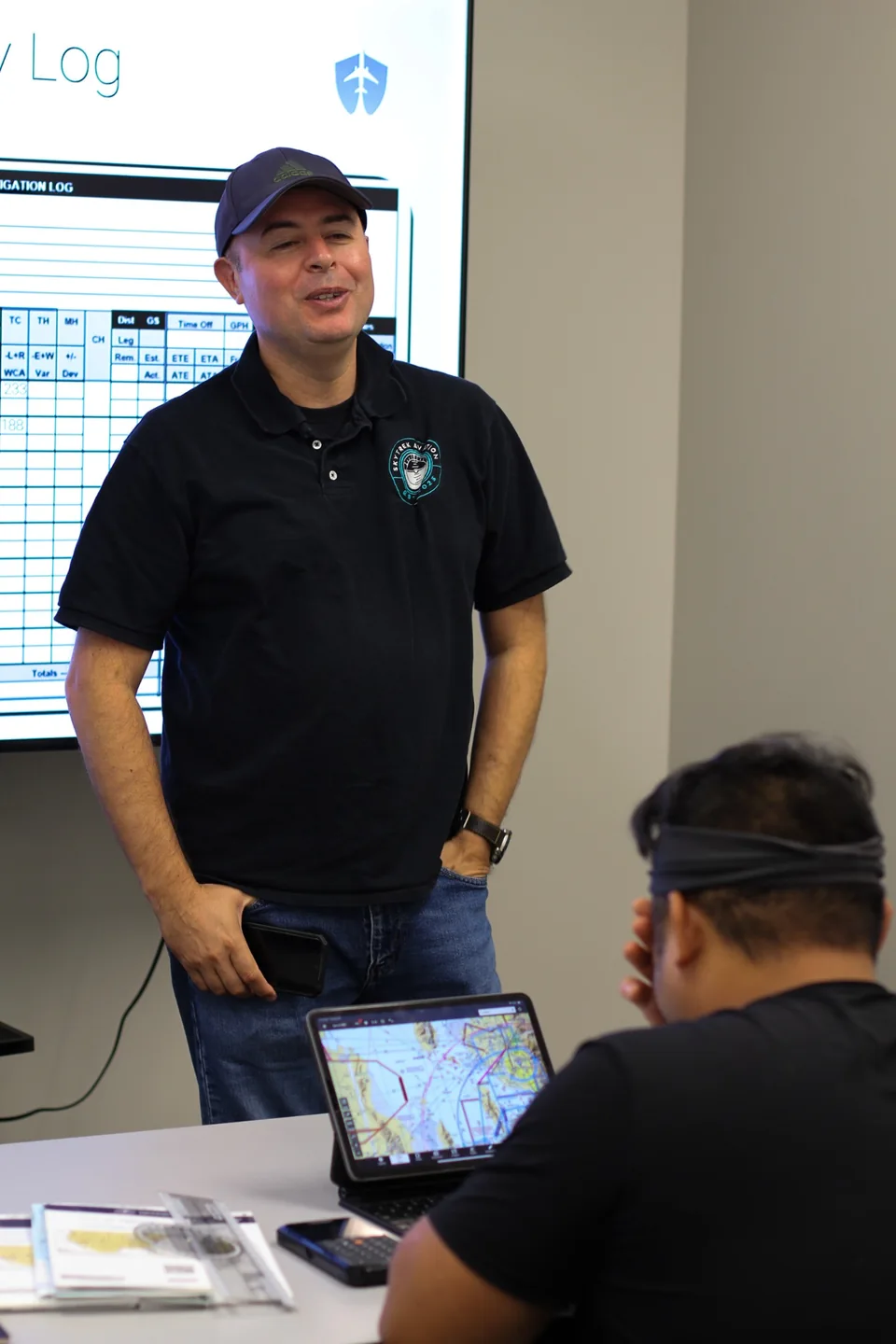
Learn in a setting where questions are welcome and progress has a purpose. Your training should feel clear, supported, and connected to the pilot you want to become.
Part 61 flexibility lets us shape your training around your experience, goals, and availability.
Thoughtful preparation, risk awareness, and honest debriefs build the habits behind confident decisions.
English and Spanish support is available during ground and flight instruction. FAA pilot certificate applicants must meet FAA English-language proficiency requirements.
Rehearse procedures, navigation, and instrument scenarios in our FAA-approved ELITE PI-235 AATD. Bring a focused plan to the simulator, then take those skills into the airplane.
Training credit depends on the device’s current FAA approval letter, the tasks completed, instructor supervision, and the applicable regulation. Device time does not build airplane PIC cross-country time.

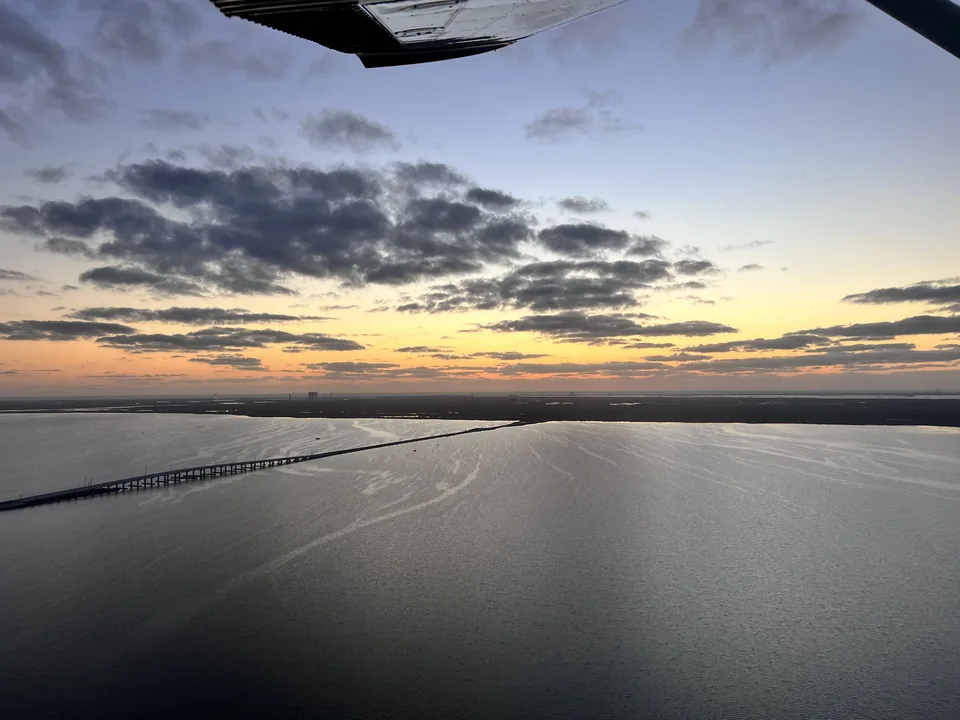
Good conversations on the ramp. New perspectives in the air. A glimpse of the people and places that make SkyTrek feel like home.
Explore the hours. Understand the costs. Bring a starting plan to your first conversation with us.
Each aircraft hour is billed once at $169; each simulator hour is billed once at $65. Instruction is $50 for every dual aircraft, dual simulator, and ground hour. Aircraft without an instructor uses the full rental rate; no cost-sharing discount is assumed.
These are editable budgeting examples, not fixed-price packages, enrollment quotes, or a determination that you meet FAA requirements. Prior experience, proficiency, weather, and scheduling affect the final plan. The 40-hour Private Pilot baseline budgets 17.5 dual + 20 solo aircraft hours and 2.5 eligible PI-235 hours, totaling 37.5 aircraft hours plus up to 2.5 device hours toward the experience requirement. The 20 solo hours require instructor authorization. Ground instruction is budgeted at zero; required ground training or home study and endorsements still apply, and any course or instructor charges are additional. The existing 60-hour example retains 45 dual + 15 solo aircraft hours and 20 ground hours.
SkyTrek Recommended budgets 30 dual + 10 solo aircraft hours, 11 simulator hours with an instructor and 25.5 ground hours. This is 40 aircraft hours plus 11 simulator practice hours, not 51 airplane flight hours. Under the applicable PI-235 LOA and §61.109(k)(1), up to 2.5 device hours may receive Private Pilot credit; the remaining 8.5 simulator hours are additional practice. All required airplane cross-country, night, solo, takeoffs/landings, three instrument-reference hours and recent practical-test preparation remain in the airplane. Credit and completion require instructor review and proficiency.
The owner-selected 11-hour Instrument hybrid budgets 5 dual + 40 other aircraft hours, 11 supervised PI-235 hours and zero ground hours ($9,120). It assumes 5 prior PIC cross-country hours and that all 45 new airplane hours qualify as student PIC cross-country. The 40-hour instrument requirement, including at least 15 qualifying CFII instrument hours, must be checked from actual records: 16 billed instruction hours must be reviewed for at least 15 qualifying CFII instrument hours. Time outside instrument conditions does not count as instrument time. Extra instruction or aircraft time may be needed; ground training or home study and endorsements remain required. Safety-pilot practice needs a qualified pilot; no paid safety-pilot cost or cost-sharing discount is included. The airplane must cover the 250 NM IFR flight on a filed plan, an approach at each airport, three approach kinds and three recent instrument-training hours.
The draft SkyTrek Recommended Instrument budget includes 24 dual + 21 other aircraft hours, 20 supervised simulator hours and 26.5 ground hours ($12,430). The separate 21-hour aircraft allowance is for PIC cross-country practice; prior logged time and qualifying routes determine whether more time is needed. Local lessons are not automatically cross-country. With no prior instrument credit assumed, the plan needs 20 qualifying airplane instrument hours in addition to 20 eligible device hours. The other aircraft hours do not automatically qualify as instrument time or PIC cross-country credit. Prior device credit uses part of the 20-hour AATD allowance; actual training and progression require lead-CFII review, the current PI-235 LOA, approved tasks and proficiency. This syllabus is not an FAA-approved course.
Commercial examples cover focused preparation, not the full certificate cost. The $3,860 proficiency example is for a student who already satisfies the relevant experience requirements: 15 dual aircraft hours, 5 supervised simulator hours and 20 instruction hours. It excludes additional time building, missing regulatory experience, ground instruction and testing expenses, and does not guarantee checkride readiness. Prior logbook experience and any device credit must be reviewed separately. CFI and CFII examples are individual preparation allowances, not FAA minimum-hour courses. Additional SkyTrek Recommended options budget 12 dual aircraft hours and 29 ground hours for CFI ($4,078), or 6 dual aircraft hours, 10 supervised simulator practice hours and 10 ground hours for the existing-CFI CFII add-on ($2,964). The original preparation examples remain available. Simulator practice does not automatically replace required Part 61 instructor flight training; eligibility, required training, endorsements and proficiency need instructor review. Except for the specifically described Private Pilot and Instrument device allowances, simulator entries show practice costs only; no other certification credit is assumed.
Not included: knowledge tests, examiner fees, medical exam, checkride aircraft rental, supplies/headset, insurance, travel, applicable taxes or other charges. Rates are the SkyTrek rates supplied for this planning tool; confirm current terms and a written estimate with the school.
No flight experience is needed to begin learning toward a Private Pilot certificate. We’ll explain the student certificate, medical eligibility, and training steps before solo flight.
It depends on your availability, preparation, proficiency, weather, and aircraft and instructor scheduling. Part 61 lets us build a plan around you; ask us to map a realistic pace after discussing your goals.
Yes. We can discuss a Part 61 schedule that works with your commitments. Consistent training and preparation between lessons help keep your progress moving.
For an instrument rating, §61.65(i) permits up to 20 hours in an approved AATD when its conditions are met. The actual credit depends on the PI-235’s current FAA approval letter and your training. Your instructor will confirm what applies; simulator hours are not airplane PIC cross-country hours.
Yes. English and Spanish support is available during ground and flight instruction. Tell us your preferred language when you reach out. FAA pilot certificate applicants must meet FAA English-language proficiency requirements.
Flight reviews, instrument proficiency, and recurrent practice begin with your recent experience and the flying you want to do.
Revisit operating knowledge and flying skills with an instructor. Discuss your logbook, current flying, and the scope of your review.
Discuss a flight reviewTalk with a CFII about instrument refreshers or an IPC. Your recent experience, required tasks, and applicable rules determine the training plan.
Discuss instrument proficiencyAfter time away or before a new flying goal, discuss a focused refresher in procedures, decision-making, and aircraft handling.
Plan a refresherReview scope and completion depend on your experience and demonstrated proficiency. Aircraft and simulator use must meet the applicable rules and device approval; simulator practice alone is not a promise of completing a flight review or IPC. FAA references: §61.56 flight review and §61.57 recent experience.
Airplane single-engine land / Part 61 overview, reviewed October 15, 2026. These summaries introduce key requirements; your instructor will review the full rules, current standards, logbook, endorsements, and medical eligibility with you.
Tell us where you are starting and what you would like to do. For a specific training or rental budget, send your inquiry from the relevant calculator to attach its estimate.
Prefer to talk? Call (321) 948-1841 or email admin@skytrekfly.com.
English and Spanish support is available during ground and flight instruction. FAA pilot certificate applicants must meet FAA English-language proficiency requirements.
Allow Google measurement of visits and accepted inquiries? Optional measurement stays off until you allow it. Your forms work with either choice. Privacy & Cookies